Lawn Alternatives & Groundcovers for Utah
Low-water groundcovers, clover, and fine fescue blends that replace thirsty turf without bare dirt.
8 min read · Updated June 25, 2026
You don't have to choose between a thirsty Kentucky bluegrass lawn and a yard of bare gravel. Between those extremes sit the lawn alternatives that actually work in Utah: a fine fescue blend that drinks half the water of regular turf, flowering mats you can walk on, and tough evergreen carpets for the spots grass never wanted anyway. Here's what replaces a lawn without leaving dirt.
~50%
Less water: fine fescue vs. bluegrass
Walkable
Fescue & thyme take foot traffic
$/sq ft
Turf removal may earn a rebate
Self-feeding
Microclover fixes its own nitrogen
The Utah lawn-alternative lineup
Each of these covers ground densely, tolerates our alkaline clay, and needs far less water than traditional turf. Choose by how much foot traffic the area really gets.
| Plant | Water | Sun | Habit / height | Notes |
|---|---|---|---|---|
| Creeping Thyme Thymus serpyllum | Low | Full sun | 2–4 in | Walkable, fragrant flowering mat between pavers or as a low-traffic lawn swap. |
| Kinnikinnick Arctostaphylos uva-ursi | Low | Sun–part shade | 6 in | Evergreen native bearberry; glossy mat with red berries for slopes and parking strips. |
| Turquoise Tails Sedum Sedum sediforme | Very Low | Full sun | 6–8 in | Succulent groundcover that knits into a drought-proof carpet in hot, lean beds. |
| Fine Fescue Blend Festuca spp. | Low | Sun–part shade | Mow 3–4 in or leave shaggy | A real low-water lawn: needs roughly half the water of Kentucky bluegrass once established. |
The real low-water lawn: fine fescue
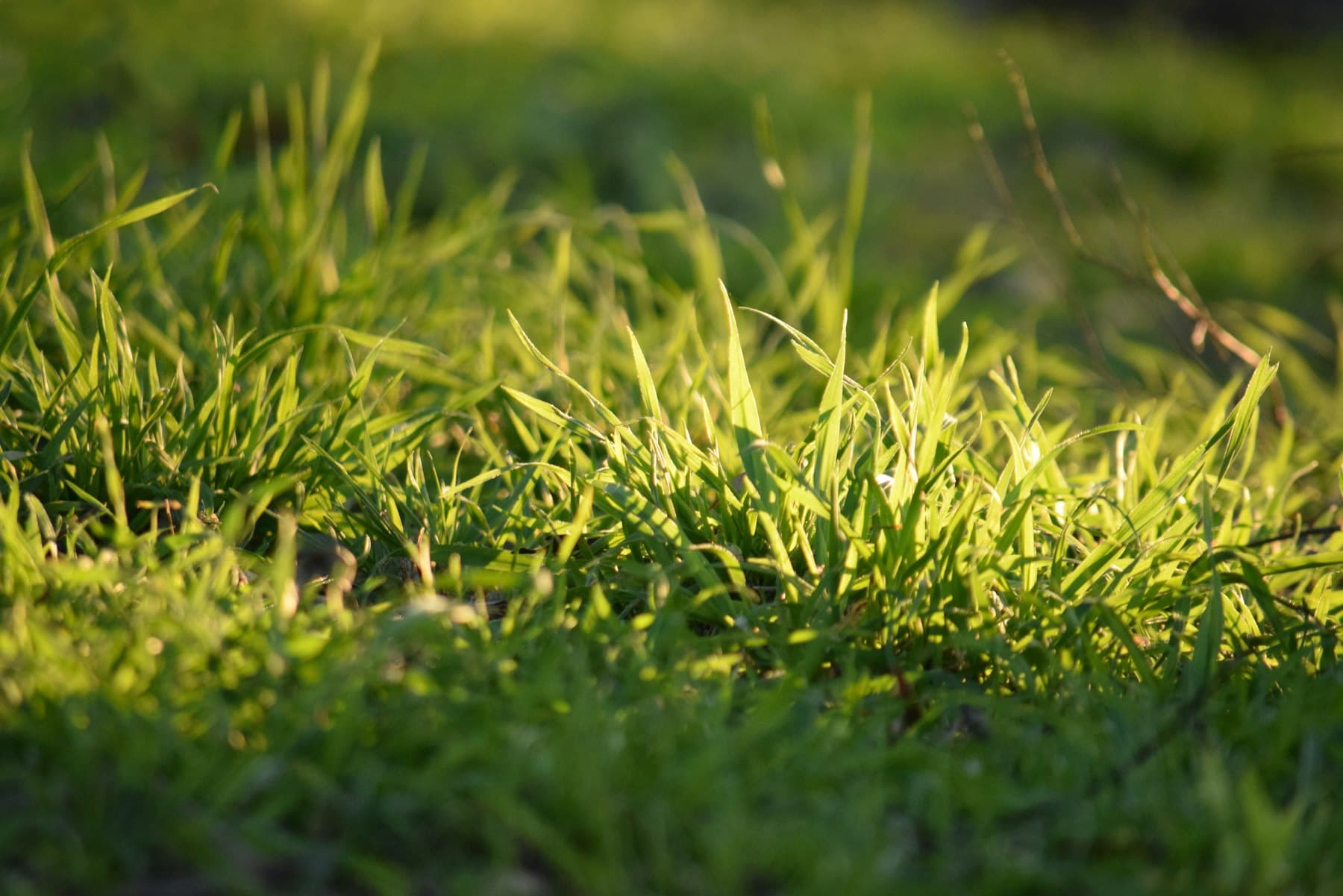
If you want something that still reads as “lawn” — green, soft, mowable — a fine fescue blend (Festuca spp.) is the answer. Once established it needs roughly half the water of Kentucky bluegrass, takes light to moderate traffic, and can be mown to 3–4 inches or left to flop into a soft, shaggy meadow. It's the single highest-impact swap for cutting a lawn's water use without giving up usable green space.
Mats for the spaces you look at
For low-traffic areas, parking strips, and gaps between pavers, the flowering and evergreen mats shine. Creeping Thyme makes a fragrant, walkable carpet that blooms in early summer. Kinnikinnick (native bearberry) is a glossy evergreen mat with red berries that holds slopes and parking strips. Turquoise Tails Sedum knits into a drought-proof succulent carpet in hot, lean beds where almost nothing else will grow.
Turn the swap into savings
Replacing lawn with these plantings often qualifies for a turf-removal incentive — but most Utah districts require pre-approval before you tear out grass. Check what yours pays in the Utah water rebate guide. If the area in question is a park strip, our park-strip conversion guide covers the new planting rules and the right install sequence.
Lawn alternatives FAQ
What uses less water than a Kentucky bluegrass lawn in Utah?
Is there a lawn alternative I can actually walk on?
What is microclover and does it work in Utah?
Will a lawn alternative qualify for a Utah water rebate?
Do groundcovers crowd out weeds?
Plant guidance per USU Extension and Utah Water Savers / Localscapes. Verified June 2026.
Who publishes this guide
This site is researched and published by Xperience Landscaping, a landscaping company based in Midvale, UT serving the Salt Lake Valley & Utah County. We write it because we install this work every week — and because no one had pulled Utah's scattered, often-outdated landscaping information into one honest place. Figures are verified against primary sources and dated; we'll always tell you to confirm a rebate or code with your district or city before you rely on it.
Keep reading
 Cornerstone
Plants
The Best Trees for Utah Yards (by Zone)
Shade, ornamental, and street trees proven in Utah's alkaline clay and USDA zones 5–7 — and the ones to avoid.
10 min read
Plants
Water-Wise Perennials for Utah
Native and adapted perennials that bloom through a Utah summer on a fraction of the water.
9 min read
Plants
Ornamental Grasses That Thrive in Utah
Movement, structure, and four-season interest — the grasses that hold up to wind, clay, and cold here.
7 min read
From the team behind this guide
Ready to build it?
This guide is published by Xperience Landscaping, a landscaping company serving the Salt Lake Valley & Utah County. If you want a real plan and a quote for your yard, we're happy to help.